
WHY BULK LPG SUPPLY MATTERS FOR WESTERN CAPE BUSINESSES IN 2026
South Africa’s energy conversation is changing again. After years of load shedding, Eskom’s 2026 winter outlook points to a more stable electricity system, with no load shedding expected under its planned scenarios. For many businesses, that is welcome news. But stability on the grid does not remove the need for practical, cost-conscious energy planning. In fact, it makes the question more strategic: how can commercial and industrial sites build energy systems that are efficient, flexible and ready?
This is where bulk LPG supply becomes important.
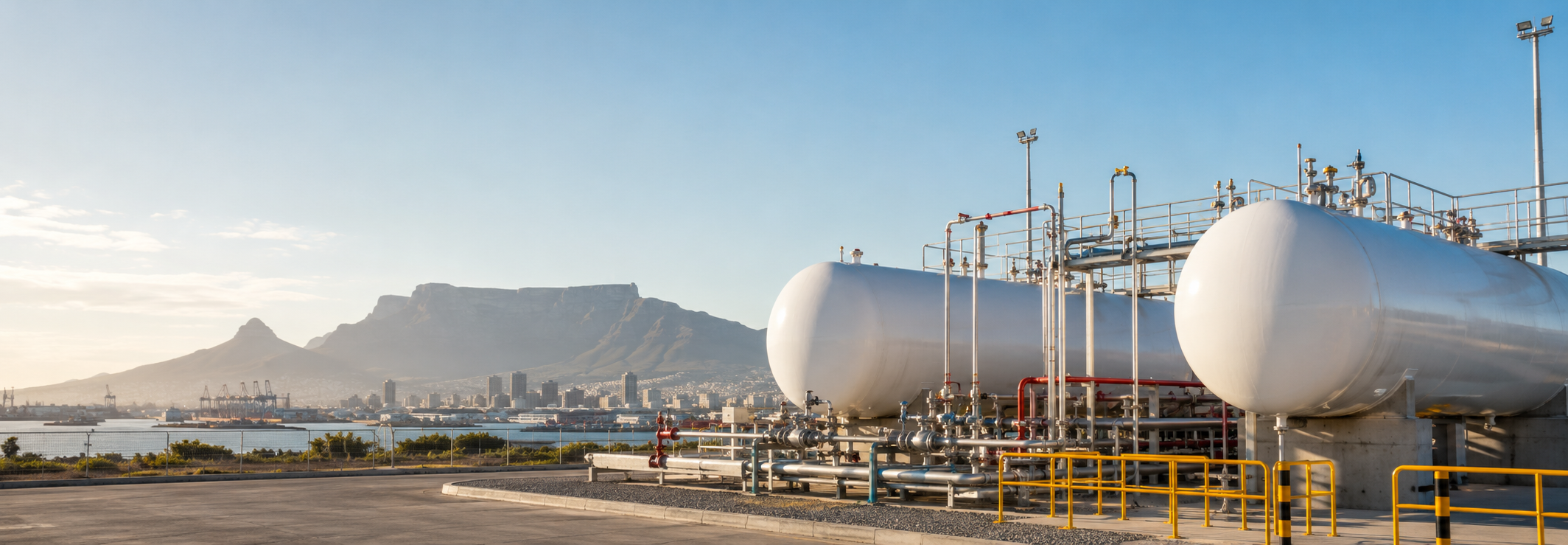
Liquefied petroleum gas, better known as LPG, is used across South Africa for heating, cooking, processing and industrial energy applications. For larger users, a bulk LPG installation can offer a better fit than relying on small cylinders or a single energy source. It gives businesses access to stored fuel on site, planned deliveries and a supply model built around usage.
In the Western Cape, this matters because many businesses operate in energy-intensive environments. Food production facilities, hospitality groups, factories, boilers, laundries, farms, commercial kitchens and processing plants all need dependable heat. Electricity may be more stable in 2026, but tariffs, municipal infrastructure issues and peak demand pressure still affect planning. A well-designed LPG system gives these sites another way to manage risk.
Developments in the LPG sector show why supply planning matters. South Africa continues to rely on both local refinery production and imported product to meet demand. Government has recently reassured the public that petroleum and LPG supply remains stable, even while global shipping and fuel markets face geopolitical pressure. At the same time, national investment in LPG distribution, including planned rail improvements, points to a market preparing for stronger demand.
For businesses, the lesson is clear. Waiting until there is pressure on supply, equipment or operating costs is not a strategy. A better approach is to assess consumption early, choose the correct tank size, ensure safe installation and work with a supplier that understands the LPG value chain.
Western Cape Bulk Gas supports this need through bulk LPG supply, installations and conversions from other fossil fuels to LPG. Their service model is especially relevant for commercial and industrial users that need more than a once-off delivery. The focus is on secure supply, compliant installations, certificates where required and operational support.
Bulk LPG is not only about replacing another fuel. It can form part of a broader energy plan. A site may still use electricity for certain processes while using LPG for heating, boilers or production requirements. This blended approach helps businesses reduce dependence on one source and match each energy input to the job it performs best.
For companies reviewing their energy costs in 2026, the starting point should be simple. What fuel does the site currently use? How much energy is required during peak periods? Is the installation compliant? Are deliveries planned around real demand? Could a conversion to LPG improve efficiency, reliability or environmental performance?
As South Africa moves into a more stable but complex energy period, bulk LPG offers Western Cape businesses a more practical option. It supports continuity, cleaner operations and control over long-term supply. For sites that depend on heat, uptime and safe storage, LPG is not just an alternative. It is part of modern energy planning.
